When it comes to gardening, seeds are the lifeblood of a bountiful harvest. Proper seed storage is essential to ensure the viability and longevity of your precious seeds. Whether you’re an avid gardener or just starting out, understanding the art of seed storage is crucial for preserving the future of your garden.
Why Proper Seed Storage Matters
If you’ve ever bought seeds from sites like Baker Creek you probably understand how valuable seeds can be! Not only because of cost considerations (though $5 a packet is killing me) but also because these rare heirloom varieties are hard to find.
Seeds are living organisms, and like any other living thing, they have specific requirements for optimal growth and survival. By providing the right conditions for seed storage, you can maintain high germination rates and extend the shelf life of your seeds. Proper storage also allows you to save seeds from your own plants for future seasons, promoting sustainability and self-sufficiency in your own back yard.
Factors Affecting Seed Viability
Several factors can impact seed viability during storage. These include moisture, temperature, light exposure, and air circulation. Understanding how these factors influence your seeds will help you create the ideal storage environment.
Moisture Control
Excess moisture can lead to seed deterioration, mold growth, and ultimately, a loss of viability. It’s crucial to store seeds in a dry environment with humidity levels below 50%. To achieve this, consider using moisture-absorbing packets or including a desiccant, such as silica gel, in your seed containers. Remember to check the moisture levels periodically and replace desiccants when necessary.
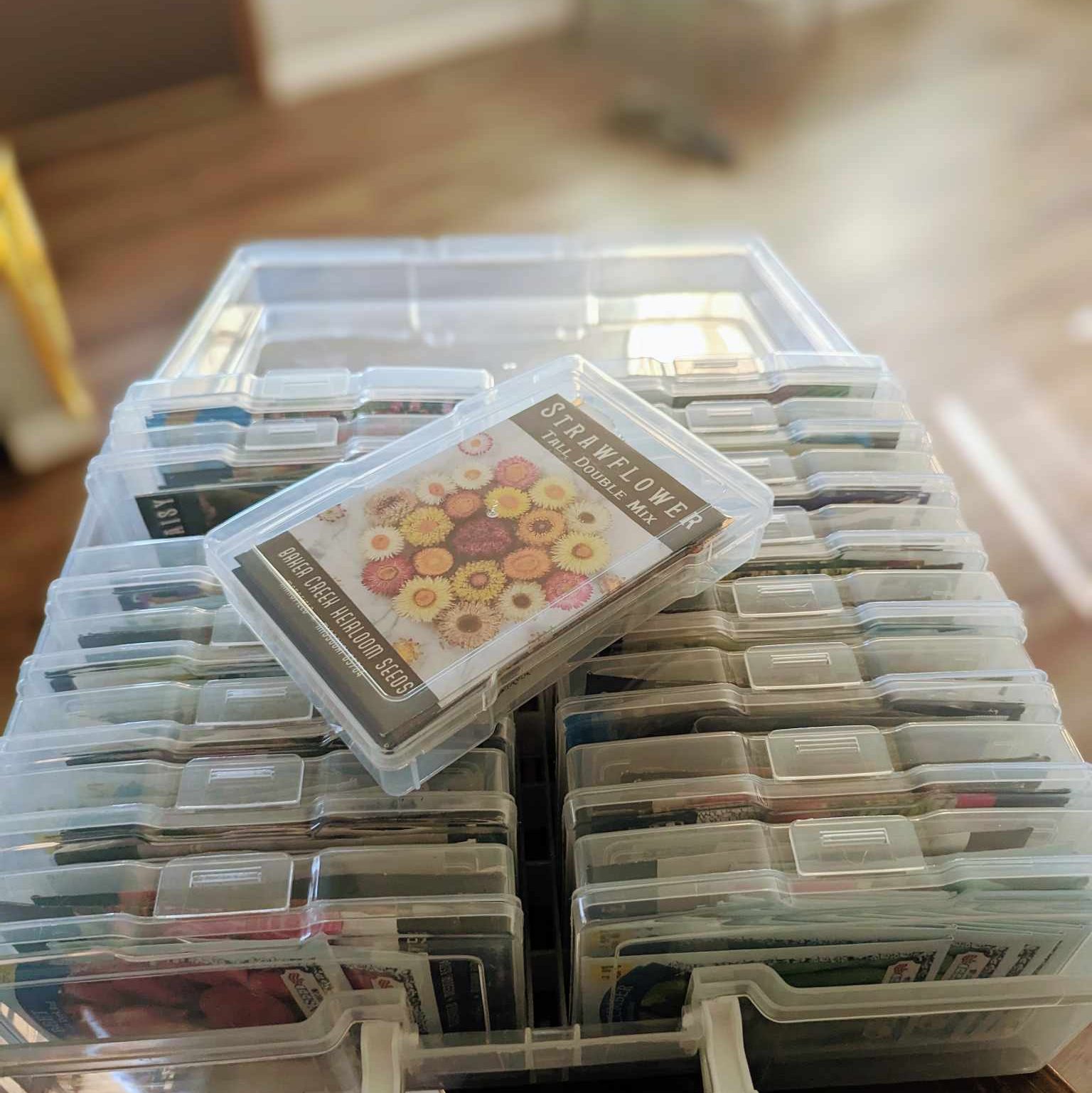
I use a plastic photo keeper to store all of my seeds and it works great! I’ve seen them at Michaels and on Amazon.
Temperature Considerations
Extreme temperatures can either accelerate seed aging or cause dormancy to break prematurely. It’s best to store seeds at temperatures between 32°F (0°C) and 50°F (10°C). Cool storage areas, such as a refrigerator or basement, can provide the consistent temperature needed to keep your seeds in optimal condition. Avoid storing seeds in areas subject to temperature fluctuations, such as near heaters or in direct sunlight.
Shielding From Light
Light exposure can stimulate seed germination or cause premature aging. To prevent this, store seeds in opaque containers that block out light. Glass or metal containers with tight-fitting lids work well for seed storage. If using clear plastic bags or containers, place them in a dark box or drawer to shield the seeds from light.
Air Circulation and Pest Prevention
Good air circulation is essential to prevent seed spoilage caused by fungal growth or pest infestations. Avoid storing seeds in completely airtight containers, as this can create a humid environment conducive to mold growth. Instead, choose breathable containers or include ventilation holes in your seed storage setup. Additionally, consider adding natural pest deterrents like dried bay leaves or diatomaceous earth to protect your seeds from insects and rodents (if storing in a garage).
Proper Packaging and Labeling
Proper packaging and labeling are crucial for easy identification and organization of your seed collection. Place seeds in individual envelopes or small, sealable bags to prevent cross-contamination. Label each package with essential information such as the seed variety, date of collection, and any specific growing instructions. Store these labeled packages in larger, labeled containers to keep your seed collection organized and easily accessible.
Testing Seed Viability
Even with proper storage techniques, seed viability may decline over time. To ensure you’re working with viable seeds, it’s a good idea to periodically test their germination rate. Simply place a set number of seeds on a moist paper towel, keep them warm and moist, and observe how many successfully germinate. This will help you determine if it’s time to refresh your seed collection or seek out new seeds for your garden.
Preserving the Future Harvest
Proper seed storage is an art that every gardener should master. By keeping seeds in optimal conditions, you can extend their shelf life, maintain high germination rates, and preserve the future harvest. Remember to control moisture levels, store seeds at the right temperatures, shield them from light, ensure proper air circulation, and use suitable packaging and labeling. By following these guidelines, you’ll be well on your way to a thriving garden year after year.
Note: The information provided in this blog post is based on general knowledge of seed storage practices. Specific seed varieties may have individual storage requirements, so always refer to the seed supplier’s instructions for the best results.



 Shelf Reliant
Leave a comment